
Real-Time WebSocket System
A high-performance C++/Qt client-server architecture utilizing persistent, full-duplex WebSocket channels to enable low-latency, bi-directional data exchange.
Robust Data Security & Integrity
To ensure the security of sensitive information across distributed systems, I implemented a dual-layer security protocol. All transmitted payloads are protected via XOR-based encryption and validated using the SHA-256 cryptographic hash function. This architecture guarantees that any unauthorized data tampering during transmission is immediately detected and discarded by the server.
Optimized Connection Management
The server efficiently handles concurrent sessions by utilizing a high-speed Hash Table to map unique client identifiers to their respective socket descriptors. This design enables low-latency message routing and scalable session orchestration.
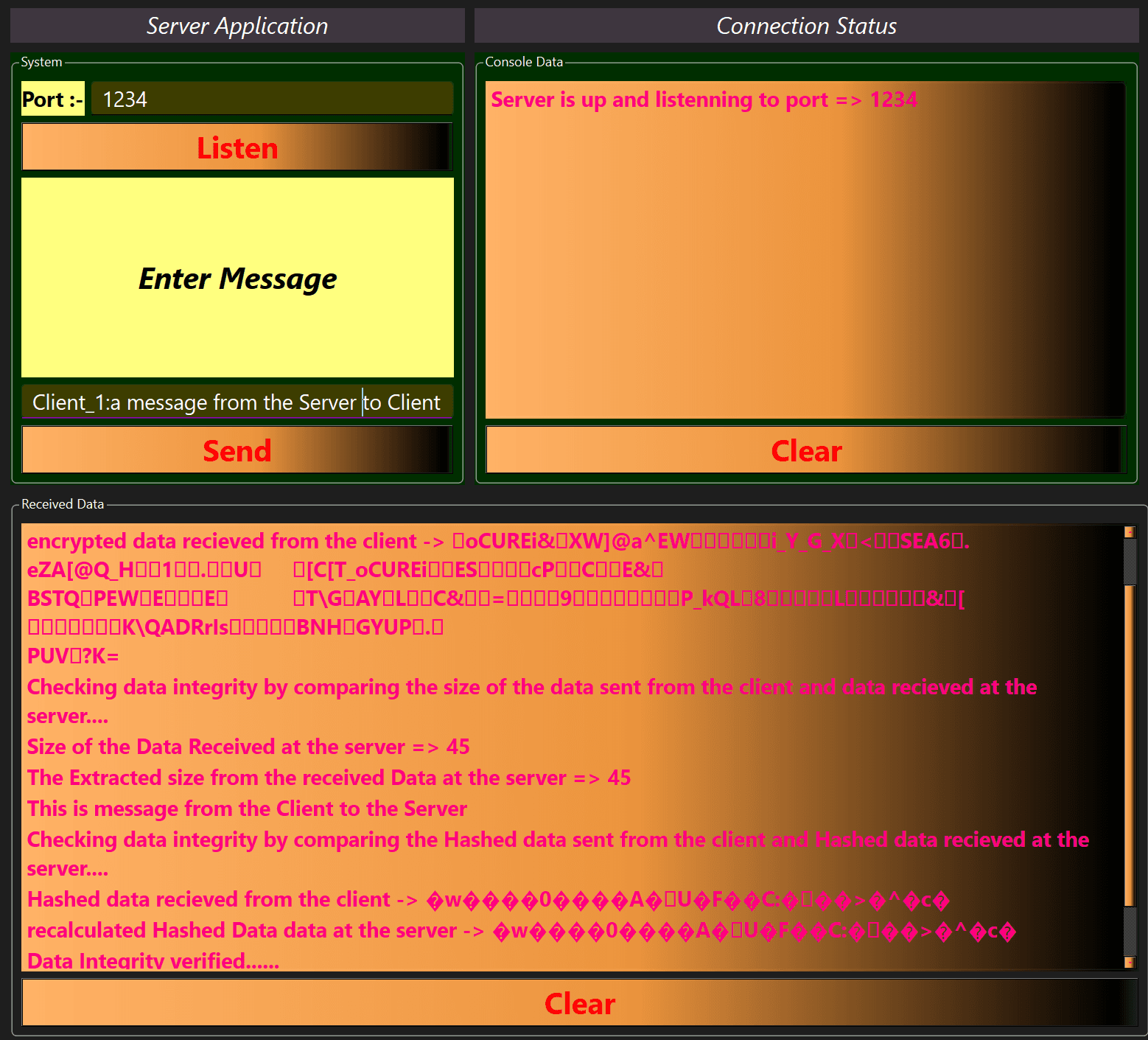
Diagram illustrates the secure communication lifecycle: The client encrypts and hashes the data packet; the server decrypts and recalculates the hash to verify authenticity before processing.
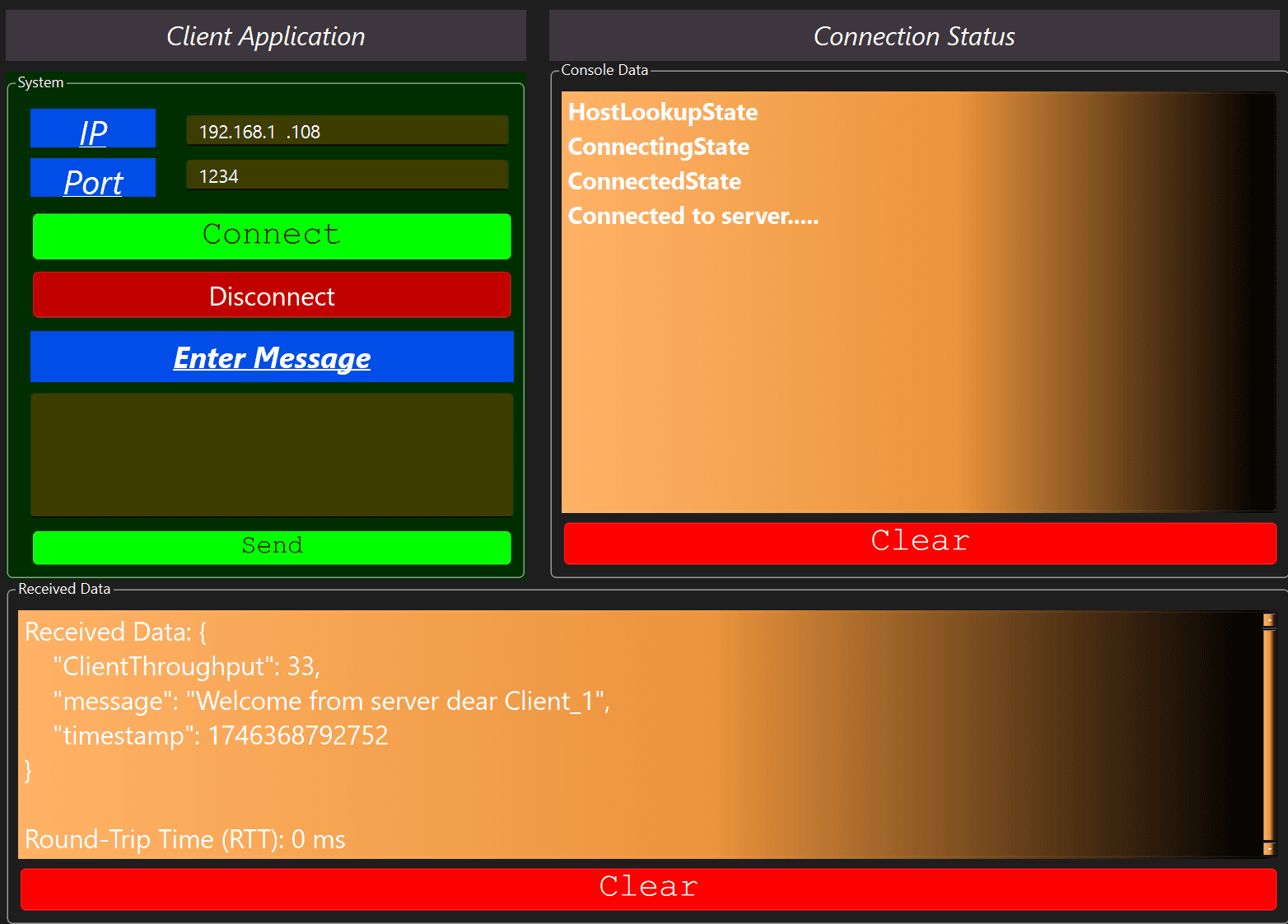
Real-Time Performance
Low-Latency Round-Trip Time (RTT)
The client tracks the millisecond-level delta between sending a request and receiving a response, ensuring the sub-second latency required for interactive distributed systems.
Throughput Monitoring
Implemented byte-per-second tracking to monitor network efficiency and detect potential bottlenecks in high-frequency data streams.
Why WebSockets over HTTP?
Unlike stateless request-response models, this system establishes a persistent, full-duplex communication channel. This design optimizes network resources and eliminates the repeated overhead of connection setup/teardown, making it ideal for chat, gaming, and real-time stock trading.